What Causes Shoulder Pain? Causes, Relief and Treatment
Shoulder pain can quietly limit your daily life, from reaching a shelf to sleeping through the night. Understanding what causes shoulder pain is the first step to easing it. This complete guide covers the common shoulder pain causes, how to find shoulder pain relief, which exercises help, and the treatment options available, so you can get back to moving freely.
What Causes Shoulder Pain?
The shoulder is the most mobile joint in the body, which also makes it prone to injury. Most shoulder pain comes from the muscles, tendons and joints around it. The main causes are rotator cuff injuries, shoulder bursitis, shoulder tendinitis, frozen shoulder and arthritis. Here is a closer look at each.
Rotator Cuff Tears and Injuries
The rotator cuff is a group of muscles and tendons that stabilise the shoulder. A rotator cuff injury, including tears or strains, is a very common cause of pain and weakness, and rotator cuff tear symptoms often include pain and difficulty lifting the arm.
Bursitis
Shoulder bursitis is inflammation of the small fluid-filled sacs (bursae) that cushion the shoulder joint, often from repetitive movement.
Tendinitis and Impingement
Shoulder tendinitis, or shoulder impingement where tendons are pinched during movement, causes pain especially as shoulder pain when lifting arm.
Frozen Shoulder
A condition where the shoulder becomes stiff and painful, gradually losing movement. Learn more in our frozen shoulder guide.
Arthritis (Osteo/Rheumatoid)
Osteoarthritis and rheumatoid arthritis can affect the shoulder joint, causing pain and stiffness over time.
What Causes Left Shoulder Pain?
A quick warning first: common left shoulder pain causes include tendinitis, bursitis and rotator cuff injury, but if left shoulder pain comes on with chest pain, shortness of breath, sweating or nausea, it can be a shoulder pain and heart attack warning sign. Seek emergency care immediately. This is rare, but it is always worth knowing.
What Causes Right Shoulder Pain?
Right shoulder pain causes are often overuse and inflammation from right-arm activities, shoulder pain from posture, or a rotator cuff strain. Because most people are right-handed, this shoulder tends to take on more repetitive load.
Why Does My Shoulder Hurt at Night?
Shoulder pain at night is a common complaint, often caused by rotator cuff problems, bursitis, frozen shoulder or your sleeping position. To ease it:
- avoid sleeping directly on the painful shoulder
- support the arm with a pillow
- keep the shoulder from rolling forward as you sleep
If night pain persists or disturbs your sleep regularly, it is worth getting it assessed.
Are Neck and Shoulder Pain Connected?
Yes, the neck and shoulder share muscles and nerves, so neck and shoulder pain often go together. Conditions like cervical spondylosis or a disc issue in the neck can radiate pain into the shoulder. This means treating the neck may also ease the shoulder. Read more in our what causes neck pain guide.
How Can I Relieve Shoulder Pain at Home?
For mild cases, these self-care steps for shoulder pain relief often help:
- rest from the activities that aggravate it, without stopping all movement
- apply ice for the first day or two, then switch to heat
- do gentle stretching within a comfortable range
- use over-the-counter anti-inflammatories, if advised by your pharmacist or doctor
Anti-inflammatory foods for joint pain, such as oily fish and leafy greens, may help too. Home care suits mild cases; persistent or worsening pain needs a professional assessment.
What Exercises Help Relieve Shoulder Pain?
Gentle shoulder pain exercises can ease pain and improve movement. For shoulder stretches for pain relief, warm up first, rest between sessions, and stop if the pain sharpens.
Pendulum Stretch
Lean forward, let the affected arm hang down, and gently swing it in small circles to loosen the joint; the pendulum and cross-body stretch pair work well together.
Cross-Body Stretch
Gently bring the affected arm across your body, supporting it with the other hand, to stretch the shoulder.
Doorway Stretch
Stand in a doorway, place your forearms on the frame and lean forward slightly to open up the chest and shoulders.
For the right form and a plan suited to your shoulder, it helps to get guidance from a physiotherapist.
How Can I Reduce the Risk of Shoulder Pain? (Lifestyle and Ergonomics)
You can lower your risk of shoulder pain with a few simple habits:
- set up an ergonomic workspace with your screen at eye level
- keep good posture, with shoulders back and relaxed
- eat an anti-inflammatory diet
- stay well hydrated
When Is Shoulder Pain Serious?
Most shoulder pain settles with the right care, but knowing when is shoulder pain serious helps. See a specialist if you have:
- severe or persistent pain
- an inability to lift or use the arm
- pain following an injury or fall
- swelling or an obvious deformity
And remember: left shoulder pain with chest pain or breathlessness is a medical emergency; call emergency services immediately.
How Is Shoulder Pain Treated?
Shoulder pain treatment usually starts with conservative options first, moving to injections or surgery only if needed.
Physiotherapy and Targeted Exercise
Physiotherapy uses targeted exercises and hands-on therapy to improve movement, build strength and ease pain, and is the first-line treatment for most shoulder problems.
Manual Therapy and Posture Correction
Manual therapy and chiropractic care, combined with posture correction, help release tension and improve how the shoulder moves.
Medication and Corticosteroid Injections (As Advised)
Anti-inflammatory medication or corticosteroid injections may be used, as advised by your doctor, to control pain and inflammation.
Surgery (Severe Cases Only)
Surgery is reserved for severe cases, such as significant rotator cuff tears, that do not respond to conservative treatment.
How Long Does Shoulder Pain Take to Heal?
Many people ask how long does shoulder pain last. Mild, posture-related or strain-related shoulder pain often eases within a few days to a couple of weeks with the right care. Frozen shoulder and rotator cuff problems can take longer, and recovery depends on the cause and how consistently you follow your plan.
Where Can I Get Shoulder Pain Treatment in Dubai?
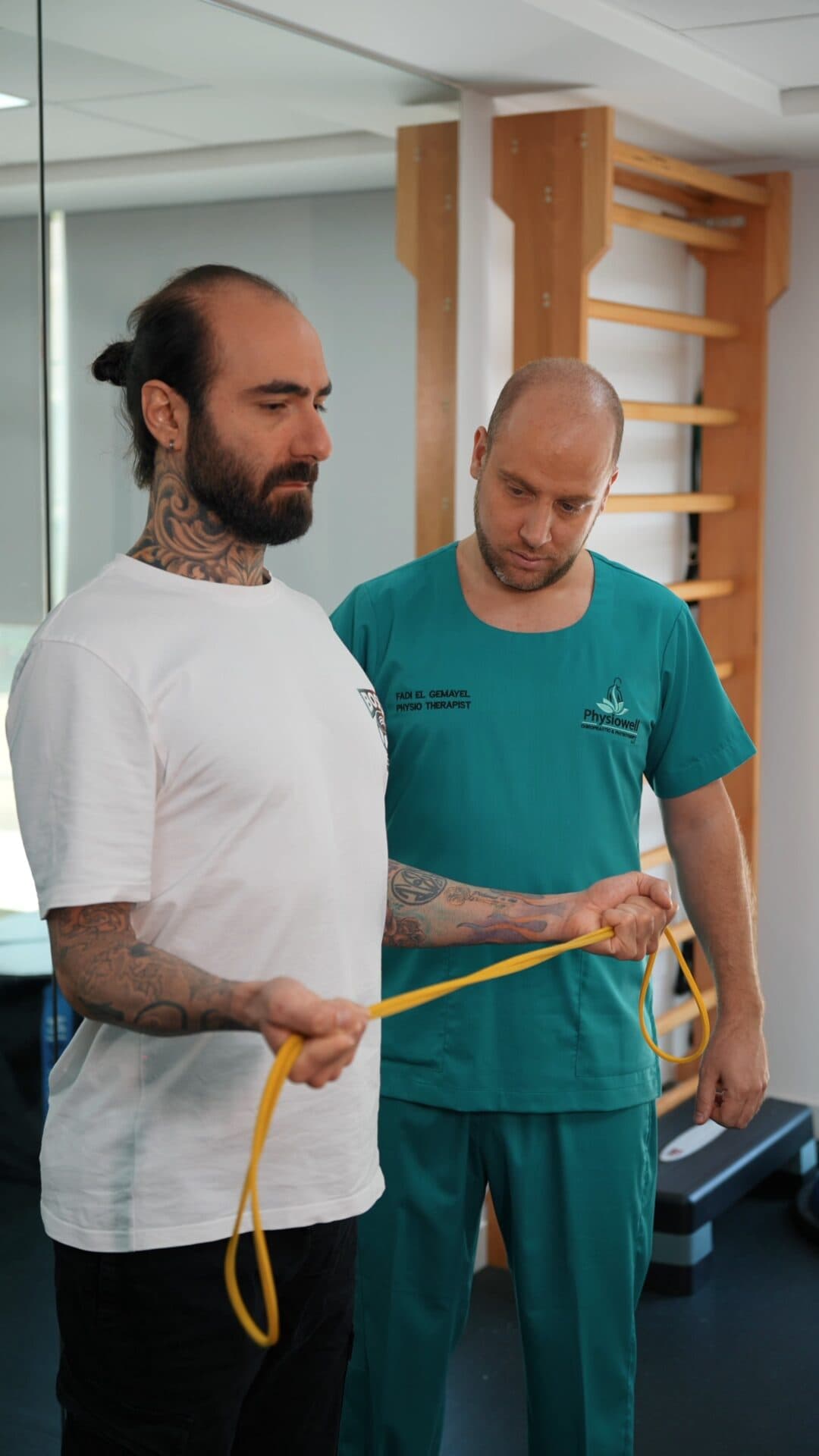
You can get shoulder pain treatment Dubai patients trust at Physiowell, a clinic with shoulder specialists offering physiotherapy and chiropractic care. As a shoulder pain physiotherapy Dubai option and a shoulder pain specialist Dubai clinic, our team assesses your shoulder and builds a plan to ease pain and improve movement, including frozen shoulder treatment Dubai patients ask for.
How Physiowell Helps Your Shoulder Move Again in Dubai
At Physiowell, care starts with an accurate diagnosis of your specific shoulder problem, whether that is a rotator cuff injury, frozen shoulder or impingement. As a shoulder physiotherapy Al Wasl Road clinic, we build a tailored plan focused on improving your range of motion and strength, following a conservative-first approach and arranging referrals only when they are genuinely needed.
Move Freely Again: Book a Shoulder Assessment with Physiowell in Dubai
Don't let shoulder pain limit your movement. Book a shoulder assessment at Physiowell and take the first step toward more comfortable movement. Our team in Al Manara, on Al Wasl Road, is easy to reach from across the city.
Physiowell, Al Manara, Al Wasl Road, Villa 947, Makani 19841 82767, Dubai, UAE. Phone: +971 4 269 2121 | WhatsApp: +971 4 269 2121 | info@physiowell.ae. Open Sunday 9am to 6pm, Monday to Saturday 9am to 7pm.