Workplace Back Pain: How to Avoid It and Work More Comfortably
Workplace back pain is one of the leading causes of work absence, and your daily work habits may be the cause. Whether you sit at a desk, stand all day or lift as part of your job, the way you work puts specific demands on your back. This guide explains why work triggers back pain from work and, more importantly, how to avoid back pain at work and lower your risk. For general daily habits, see our guide on the activities that cause back pain.
What Causes Back Pain at Work?
Most workplace back pain is caused by prolonged static postures and repetitive strain, holding one position too long or repeating the same movement. Work related back pain and musculoskeletal pain at work are usually mechanical, coming from the muscles and joints rather than a disease, which means it can often be reduced. The main work triggers behind occupational back pain are sitting, standing and lifting.
Why Does Sitting at Work Cause Back Pain?
Back pain from sitting at work is the number one cause of office worker back pain. It loads the lumbar discs and lets the muscles that support the spine weaken, and desk job back pain builds from there. To reduce the strain:
- adjust your chair height so your feet are flat
- support your lower back with a cushion or lumbar roll
- stand up and move regularly, at least every 30 minutes
Why Does Standing All Day Cause Back Pain?
Back pain from standing all day also overloads the lumbar discs and the muscles of the lower back. This affects teachers, cleaners, hospitality and retail workers in particular. To ease it:
- take regular breaks to sit and rest
- wear comfortable, supportive shoes
- shift your weight and change position often
How Should I Lift Safely at Work?
If your job involves back pain from lifting at work, good technique supports your back and reduces reliance on painkillers. To lift safely:
- bend at the knees, not the waist
- keep your back straight
- hold the load close to your body
- avoid twisting; turn with your feet
What Is the Best Posture for Working at a Desk?
Good posture at work takes pressure off your spine, and the best office chair posture follows a few simple rules:
- set your chair height so your feet rest flat on the floor
- support your lower back
- position your screen at eye level
- keep your knees at about a 90-degree angle
Remember, no posture is perfect forever; the key is to change position regularly.
How Do I Set Up an Ergonomic Workstation?
A good ergonomic workstation setup makes good posture effortless. Check the following:
- a supportive, adjustable chair
- desk at the right height for relaxed shoulders
- monitor at eye level, about an arm's length away
- keyboard and mouse placed so your wrists stay neutral
- a standing desk for back pain, to alternate sitting and standing
What Are Postural Pain Syndrome and Postural Dysfunction?
These are two patterns of posture-related back pain worth knowing.
Postural pain syndrome: pain caused by holding a poor posture for a long time; it eases with movement, and there is no loss of strength or flexibility yet.
Postural dysfunction: the next stage, where over time the soft tissues shorten and some muscles weaken as the body adapts to the poor posture.
Over time, ongoing postural strain can contribute to muscle imbalance, which is why addressing it early helps.
What Other Work-Related Pain Can Poor Habits Cause?
Work strain isn't limited to the back. Repetitive tasks can cause other problems too. Packing and repetitive gripping can lead to tennis elbow from work, while long hours at a computer often cause neck pain from computer work. Each comes from repeated mechanical stress on the tissues, and each responds well to early treatment.
What Desk Stretches and Exercises Relieve Back Pain?
A few gentle desk stretches for back pain can ease tension through the day, and these exercises to do at your desk are easy to fit in:
- seated spinal twist: turn gently to each side
- shoulder rolls to release upper-back tension
- seated forward fold to stretch the lower back
- stand and reach up to lengthen the spine
Knowing how often to take breaks from sitting matters too: regular movement breaks beat one big stretch. For a routine tailored to your job, it helps to see a physiotherapist.
Can I Keep Working with Back Pain?
Wondering can I work with back pain? In most cases, yes; gentle movement is usually better than total rest, and staying lightly active helps recovery. However, pushing through worsening pain risks turning a short-term problem into a chronic one. If your pain is persistent or getting worse, get professional advice early rather than working through it.
Where Can I Get Treatment for Work-Related Back Pain in Dubai?
You can get workplace back pain treatment Dubai employees and employers rely on at Physiowell. We offer both individual office back pain physiotherapy Dubai, so whether you are an employee or an employer, we can help look after your team's backs. For the clinical side, explore our back pain treatment options.
How Physiowell Helps You Work More Comfortably in Dubai
At Physiowell, we focus on workplace-specific care, with personalised programs for office, standing and manual workers. As a back pain specialist Dubai team and a chiropractor Al Wasl Road Dubai option, we also provide corporate and work physiotherapy services for companies, aiming to support employees with work-related back discomfort. Our therapeutic Pilates and posture retraining, which you can practise at your desk, keep you moving comfortably through the working day, alongside our wider rehabilitation support.
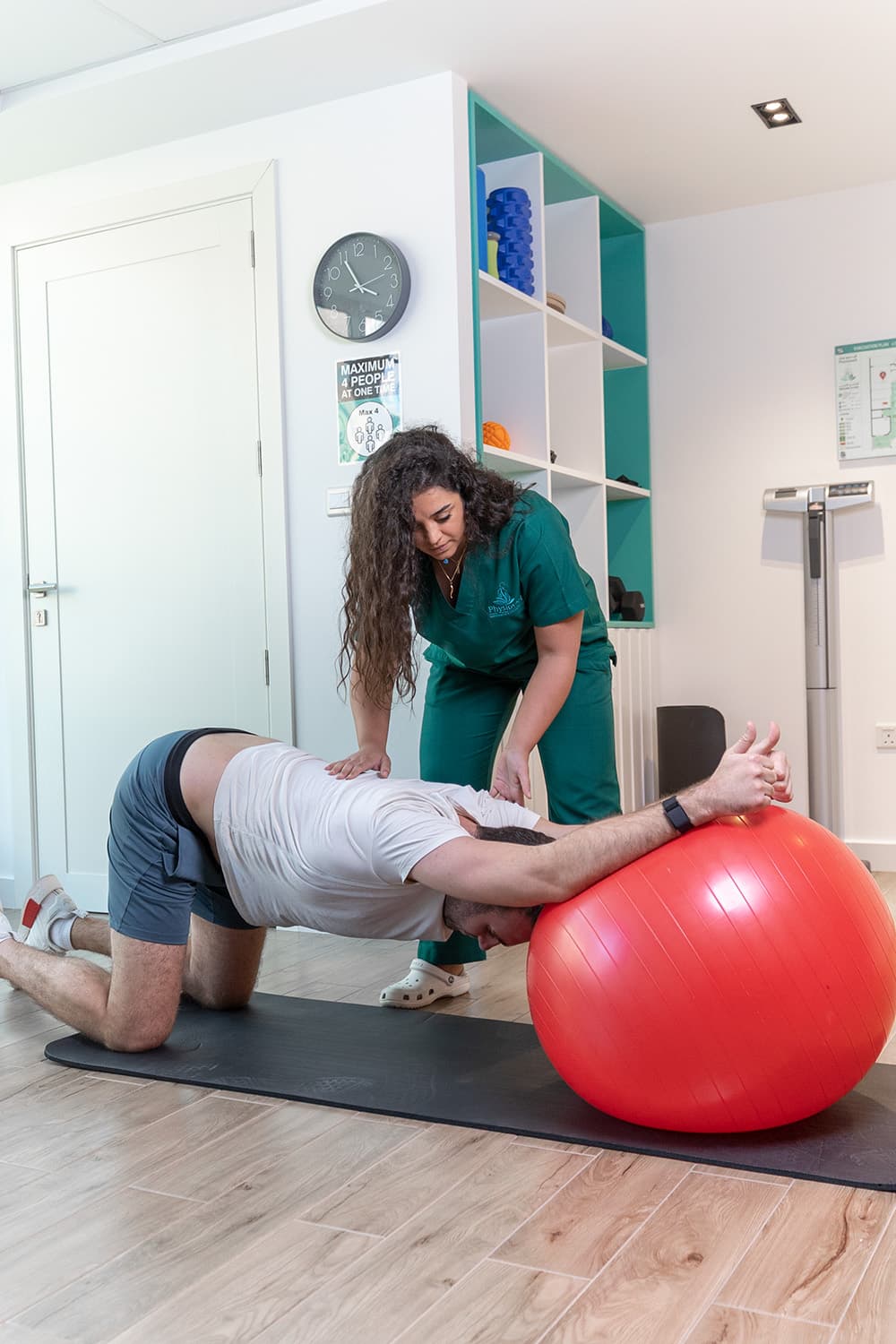
Look After Your Back at Work: Book with Physiowell in Dubai
Look after your back before pain becomes chronic. Book an assessment at Physiowell and work more comfortably. To understand the root of your pain, read our lower back pain causes guide, or reach our team in Al Manara, on Al Wasl Road, from across the city.
Physiowell, Al Manara, Al Wasl Road, Villa 947, Makani 19841 82767, Dubai, UAE. Phone: +971 4 269 2121 | WhatsApp: +971 4 269 2121 | info@physiowell.ae.Monday to Saturday 9am to 7pm.