Golfers Elbow Treatment Dubai | Non Surgical Care at Physiowell
Golfers elbow treatment Dubai care at Physiowell helps ease the pain and weakness felt on the inner side of the elbow. Golfer's elbow Dubai patients describe is an overuse injury that makes gripping, lifting and wrist movements uncomfortable. With the right care, most cases settle well without surgery, and starting treatment early tends to shorten the whole episode.
Whether you need inner elbow pain treatment Dubai support, physiotherapy for golfer's elbow Dubai care, or guided medial elbow pain treatment Dubai work, our team builds a plan around your specific pattern of pain and the activities feeding it. Book an assessment to get started.
What Is Golfer's Elbow?
Golfer's elbow, known medically as medial epicondylitis, affects the tendons on the inner side of the elbow. These tendons control your wrist and finger movements, and they become irritated when overused. Medial epicondylitis treatment Dubai care addresses this irritation at its source.
It's the inner-elbow counterpart to tennis elbow, which affects the outer side. And despite the name, golf is rarely the actual cause.
What Causes Inner Elbow Pain?
Inner elbow pain Dubai patients experience usually builds up from repeated strain on the forearm tendons. Common causes include:
- overuse of the wrist and forearm
- repetitive wrist bending and twisting
- frequent gripping or squeezing
- lifting, especially with the palm facing up
- manual trades such as plumbing, mechanics or carpentry that load the inner forearm
Can Gym, Lifting or Typing Cause Golfer's Elbow?
Yes. Golfer's elbow is far more common in everyday life than on the golf course. The cause is the repeated load on the inner forearm tendons, so these everyday patterns can all trigger it:
- Elbow pain from lifting Dubai patients describe is one of the most common reasons we see this condition in Dubai gyms
- Golfers elbow from typing Dubai cases show up in office workers with poor desk setup, especially mouse-heavy roles
- Gym training with deadlifts, pull-ups, bicep curls or kettlebell work
- Padel, tennis (forehand strokes) and squash with poor technique
- Carrying heavy bags or holding a toddler with the palm facing up
Weightlifters, office workers and tradespeople develop it just as often as golfers.
Why Does Inner Elbow Hurt When Lifting?
Lifting loads the tendons that run along the inner forearm and attach at the elbow. When these tendons are already irritated, each lift pulls on the sore attachment and sparks pain. Repeated lifting keeps overloading the tendon before it can settle, which is why the inner elbow stays painful until the load is reduced and the tendon is given a chance to recover.
In practical terms, this means tasks like carrying a shopping bag, holding a bottle of water or lifting a dumbbell with your palm up can become painful well before the elbow itself feels obviously injured.
Golfer's Elbow vs Tennis Elbow: What's the Difference?
The two sound similar but affect different sides of the elbow:
- Golfer's elbow affects the INNER side of the elbow. Triggered by wrist flexion and gripping (lifting with palm up, forehand strokes, pull-ups).
- Tennis elbow affects the OUTER side of the elbow. Triggered by wrist extension (lifting with palm down, backhand strokes, typing).
The treatment principles are similar, but the exercises and load management are tendon-specific. Learn more about tennis elbow on our condition page.
Is Golfer's Elbow Permanent?
No. Golfer's elbow isn't a permanent condition for most people. The clear majority of cases settle fully with proper care and activity changes. What makes it feel permanent, in some cases, is going back to the aggravating activity too soon or doing the wrong exercises at the wrong stage. Addressing it properly, even if it has been there for months, usually brings meaningful improvement.
Can Golfer's Elbow Heal Without Surgery?
Yes. Most golfer's elbow cases heal without surgery. Non surgical golfer's elbow treatment Dubai care works for the clear majority of patients, and surgery is reserved for the small number of cases that haven't responded to several months of structured conservative care.
The approach calms the irritated tendon, then gradually works on its tolerance to load, while reducing the risk of the pain returning.
Do I Need Physiotherapy for Golfer's Elbow?
In many cases, yes. Physiotherapy for golfer's elbow Dubai care is one of the most reliable routes to recovery, because it addresses the cause rather than just the symptoms. It reduces strain, supports movement and gradually develops the tendon so it can handle daily loads again. This approach also helps reduce the chance of the pain coming back once you're back to normal activity.
Non Surgical Golfer's Elbow Treatment Options in Dubai
Most golfer's elbow responds well to conservative care that calms the tendon and develops its capacity. A non surgical golfer's elbow treatment Dubai plan typically includes:
- relative rest and load management to reduce strain
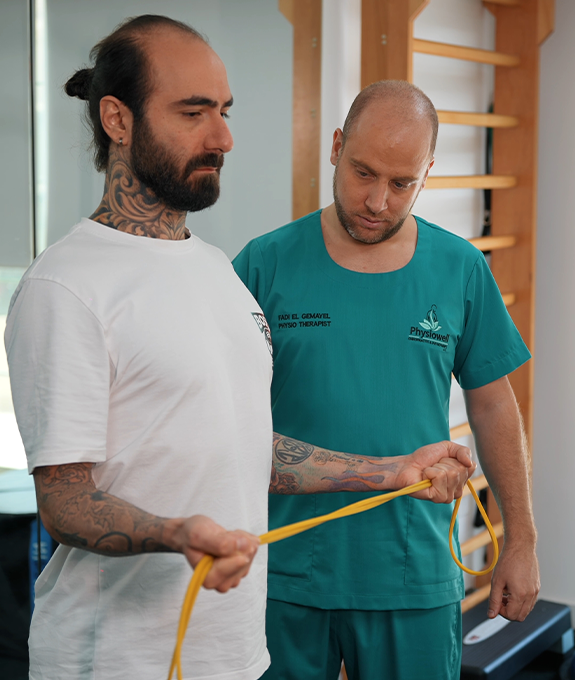
- physiotherapy and guided rehabilitation exercises
- manual therapy to help ease forearm tension
- progressive strengthening to support grip and function
- shockwave therapy for stubborn, long-standing cases where appropriate
Golfers Elbow Exercises That Can Help
Golfers elbow exercises Dubai patients ask about typically fall into three groups. The right starting point depends on how irritable the tendon is, and a physiotherapist should guide the pace.
Isometric Holds
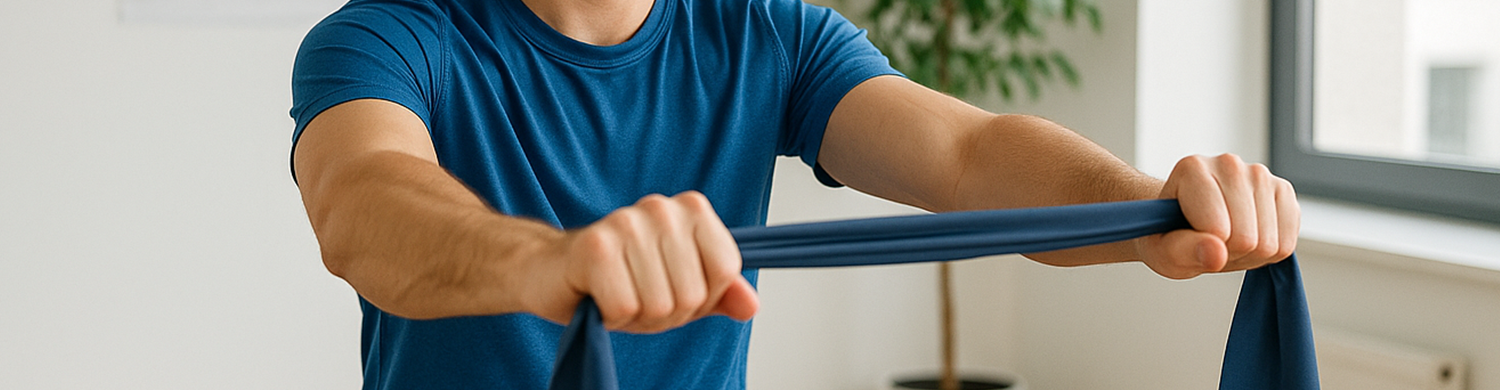
Static grip and wrist flexion holds that load the tendon without movement. Often the first-line choice when pain is sharp, because they can ease pain and start building tendon tolerance.
Eccentric Loading
Slow, controlled wrist flexion lowering with a light weight or a FlexBar. Added once the tendon tolerates isometrics, this is where real strength returns.
Grip and Functional Work
Progressive grip strengthening and sport- or work-specific loading as the tendon settles. This is what carries clinic gains into real-world activity.
If an exercise sharply increases your pain or triggers next-day soreness that lasts beyond 24 hours, stop and get guidance. The wrong exercise at the wrong stage can prolong the problem.
How to Ease Elbow Pain Quickly
There's no honest shortcut, but a few safe habits can support faster, steadier progress alongside your treatment:
- modify or pause the activities that spark the pain, even for a short period
- apply a cold compress for 10 to 15 minutes after aggravating activity
- avoid gripping with the palm up and heavy carrying for the first few days
- stay consistent with the isometric holds your physio prescribes
- book a professional assessment rather than pushing through
How We Treat Golfer's Elbow at Physiowell
Our approach focuses on two things: settling the tendon, then developing grip and function:
Detailed assessment: we check your elbow, wrist and grip strength carefully.
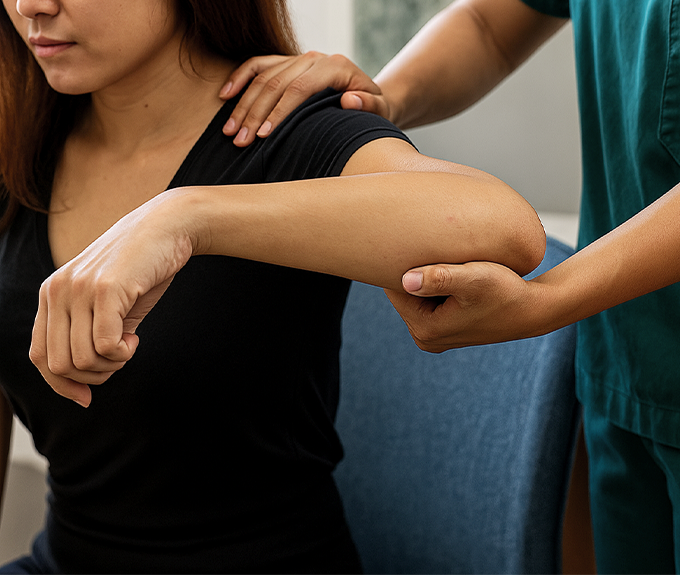
Hands-on therapy: to help ease pain and forearm tension.
Movement-based rehabilitation: matched to your daily activities, whether that's desk work, gym, padel or manual trade.
Progressive grip and strength work: to support function without aggravating the tendon.
What to Expect During Your Golfer's Elbow Treatment
Your journey at Physiowell usually follows a simple path:
Assessment: we evaluate your inner elbow, grip and the movements that bring on pain.
Diagnosis: we confirm golfer's elbow and rule out other causes of inner elbow pain such as ulnar nerve irritation or cervical referral.
Treatment plan: we build a personalized plan to help ease pain and develop tendon strength.
Recovery guidance: we guide your safe return to work, training or sport, with the goal of helping reduce the risk of the problem returning.
How Long Does Golfer's Elbow Take to Heal?
Recovery varies from person to person. Here's a realistic guide:
Mild cases, caught early
A few weeks to 2 months with activity changes and a consistent rehab plan.
Moderate cases
3 to 6 months, especially when the pain has been building for a while before treatment started.
Stubborn or long-standing cases
6 to 12 months, sometimes longer. Shockwave therapy and more specific tendon loading programs may be needed.
Recovery depends on the severity and how well you modify the activities that aggravate it. If you also have outer elbow symptoms, our tennis elbow treatment follows a similar path.
Why Choose Physiowell for Golfer's Elbow Treatment
People choose Physiowell for personal, professional care built around your recovery. We offer:
- DHA-licensed physiotherapists with focused experience in tendon rehabilitation
- personalized treatment plans built around your activity level and triggers
- a non-surgical, evidence-based approach
- a multidisciplinary team across physiotherapy and rehabilitation care
- a convenient Dubai location on Al Wasl Road, in Al Manara
Visit Our Elbow Clinic in Dubai
Physiowell, Al Manara, Al Wasl Road, Villa 947, Makani 19841 82767, Dubai, UAE. Easy to reach from Dubai Marina, Jumeirah and across the city.
- Landmark: in Al Manara, on Al Wasl Road, close to Safa Park
- Parking: free on-site and street parking available
- Opening hours: Sunday 9am to 6pm, Monday to Friday 9am to 7pm (closed Saturday)
- Phone: +971 4 269 2121 | WhatsApp: +971 4 269 2121 | info@physiowell.ae
Book Your Golfer's Elbow Treatment in Dubai
You don't have to push through inner elbow pain. Book an assessment with our team at Physiowell and start a personalized plan to help ease the pain and develop your grip strength again. If you're searching for an elbow specialist near me in Dubai, our team on Al Wasl Road, in Al Manara, is easy to reach from across the city.