Migraine Treatment in Dubai
Migraine treatment in Dubai has expanded beyond medication alone. Physiotherapy may play a role in managing certain headaches and migraines where neck pain, restricted movement, posture or muscle tension contribute to symptoms. . At Physiowell, our DHA licensed team on Al Wasl Road, Al Manara, works with patients whose migraines have a physical component that responds to manual therapy, movement retraining, and personalised care. This guide covers how physiotherapy fits into migraine treatment, which migraine types we work with, and how to book an assessment.
What is a migraine and how is it different from a headache?
A migraine is a neurological condition marked by moderate to severe throbbing pain, often on one side of the head, and typically accompanied by nausea, light sensitivity, or visual disturbances. A regular headache is usually shorter, milder, and lacks these features.
A migraine is a neurological condition marked by moderate to severe throbbing pain, often on one side of the head, and typically accompanied by nausea, light sensitivity, or visual disturbances. A regular headache is usually shorter, milder, and lacks these features.
The differences at a glance:
- Duration: migraine attacks often last 4 to 72 hours, while tension headaches typically last 30 minutes to a few hours.
- Symptoms: migraines usually include nausea, light and sound sensitivity, and sometimes aura, while regular headaches do not.
- Severity: migraines are usually moderate to severe, while tension headaches are usually mild to moderate.
- Triggers: migraine triggers are often specific (foods, hormones, sleep changes), while tension headaches are typically linked to stress and muscle tightness.
Migraines are further classified into migraine with aura (visual or sensory changes before the pain) and migraine without aura (the more common form). Understanding your type helps guide the right care.
Can Physiotherapy Help Treat Migraines?
Physiotherapy may help reduce the frequency and severity of certain migraine types, particularly cervicogenic and tension-related migraines, through manual therapy, posture correction, and targeted exercise.
In some patients, neck mobility, muscle tension and other musculoskeletal factors may contribute to headache symptoms. A physiotherapy assessment can help determine whether these factors are relevant and whether they may be appropriate targets for treatment.
Physiotherapy complements neurological and medical care. It is not a substitute for medication or a neurologist's assessment when either is indicated. For many patients, the two approaches work well together.
Types of Headaches and Migraines We Work With
Our team most often works with migraine and headache types where movement, posture, and muscle tension play a measurable role.
Cervicogenic Headaches
Cervicogenic headaches originate from the cervical spine or upper neck structures. They typically start at the base of the skull, are one-sided, and are aggravated by neck movement or sustained postures.
Physiotherapy targets these directly through joint mobilisation, deep neck flexor training, and posture correction. For neck-specific care, see our neck pain treatment in Dubai page.
Tension-Type Headaches
These bilateral, pressure-like headaches are linked to muscle tension and stress. Treatment combines soft-tissue release across the upper trapezius and suboccipital region, upper-back and neck mobility work, and practical ergonomic advice for desk-based patients.
Chronic Migraines
Chronic migraines are defined as 15 or more headache days per month, with at least 8 having migraine features, for three months or more. Physiotherapy may play an adjunct role, addressing the neck and muscular drivers that can increase attack frequency.
Post-Concussion Headaches
Headaches following a concussion or mild head injury often have a cervical component. Our approach includes cervical spine assessment and a gradual return to activity. Patients with red flag symptoms are referred back to their physician.
What Causes Chronic Migraines?
Chronic migraines are typically driven by a combination of factors, not a single cause. Common contributors include:
- Neck and posture dysfunction: restricted movement or poor alignment in the cervical spine.
- Muscle tension: tightness in the neck, shoulders, and upper back.
- Stress: sustained stress patterns increase headache frequency.
- Sleep disruption: poor sleep quality is a well-established migraine driver.
- Hormonal changes: particularly relevant during menstrual cycle changes and perimenopause.
- Diet and lifestyle: individual dietary and lifestyle triggers vary widely.
Identifying which factors matter most for you requires a proper assessment. What contributes to one patient's migraines may play little role in another's, which is why generic advice rarely works long term.
Common Migraine Triggers to Track
Tracking potential triggers may help some patients and their clinicians identify patterns associated with migraine attacks. Trigger patterns are highly individual, so keeping a simple record may help identify factors worth discussing with your clinician.
Common trigger categories:
- Sleep: irregular sleep, too little or too much.
- Food and drink: aged cheeses, cured meats, red wine, sudden caffeine changes.
- Hormonal: menstrual cycle changes and other hormonal shifts.
- Environmental: bright lights, loud sounds, strong smells, weather changes.
- Physical: skipped meals, dehydration, intense exertion, poor posture.
A basic migraine diary should log the onset time, duration, pain intensity, and what happened in the 24 hours before the attack. Over time, the diary may help identify patterns that can be discussed with your clinician.
Our Migraine Treatment Approach at Physiowell
Our migraine treatment approach combines a full assessment with hands-on manual therapy, posture and movement retraining, and personalised trigger management.
Assessment (First Visit)
We start with a detailed history covering your migraine pattern, known triggers, and any medical care already in place. This is followed by a physical assessment of the cervical spine, upper back, jaw, and posture.
We also screen for red flag signs that would need a referral back to a physician or neurologist.
Manual Therapy
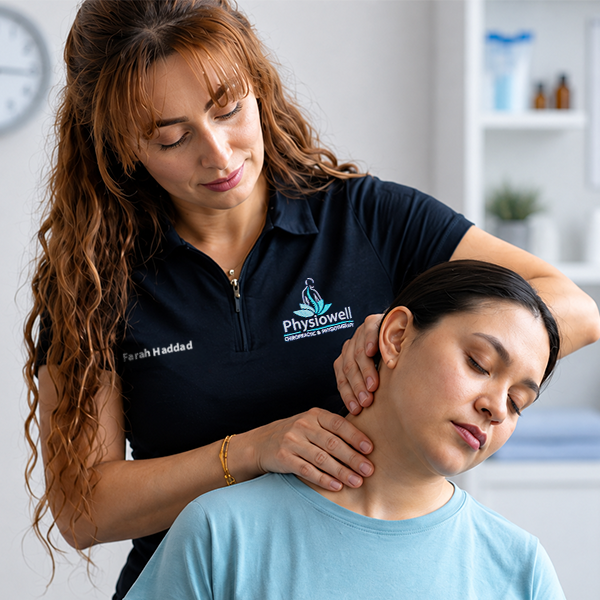
Where clinically indicated, treatment includes joint mobilisation of the upper cervical and thoracic spine, soft-tissue release across the suboccipital, upper trapezius, and temporalis muscles, and dry needling for stubborn trigger points.
Posture and Movement Retraining
We work on deep neck flexor activation, scapular control, and workstation ergonomics for desk-based patients. You leave with a home exercise programme that progresses between visits.
For practical posture strategies, see our guide on tech neck and office worker posture.
Trigger Management Coaching
Guided use of a migraine diary helps identify modifiable lifestyle drivers. Where indicated, we refer to relevant specialists in nutrition, sleep medicine, or psychology to address non-physical triggers alongside the physical work.
How Long Does Migraine Treatment Take?
The answer is variable depending on your specific case. Early sessions are typically weekly, then spaced further apart as symptoms improve.
Response varies. Some patients notice changes within 3 to 4 sessions, others need longer. Ongoing self-management, particularly your exercise programme and trigger awareness, continues after the structured programme ends.
Timelines given at your first assessment are based on your specific findings, not a fixed schedule.
When Should You See a Specialist for Migraines?
Seek urgent medical review if a headache is sudden and severe (often described as the worst headache of your life), follows a head injury, or is accompanied by neurological symptoms such as weakness, vision loss, confusion, or difficulty speaking.
These features can point to serious underlying conditions that need immediate care.
Non-urgent but important reasons to see a physician or neurologist include migraines that are becoming more frequent, migraines that are not responding to your current care, or migraines that are increasingly disrupting daily life.
Physiotherapy is not a substitute for this medical review; it works alongside it.
Is Migraine Treatment in Dubai Regulated by the DHA?
Physiowell and its healthcare professionals are licensed by the Dubai Health Authority (DHA), and treatment is provided within each practitioner's licensed scope of practice.
Patients can verify a physiotherapist's DHA license through the Sheryan platform on the DHA website. At Physiowell, all clinical staff hold current DHA licenses.
Visit Our Migraine Physiotherapy Clinic in Al Manara, Dubai
Physiowell is located on Al Wasl Road in Al Manara, Dubai, and welcomes patients from across the emirate. The clinic is easily accessible from Jumeirah, Umm Suqeim, and Downtown, with parking available near the entrance.
To book an assessment, call or WhatsApp us on +971 4 269 2121, or use the online booking form on our website.
Frequently asked questions about migraine treatment in Dubai
Is Migraine Treatment Covered by Health Insurance in Dubai?
Many Dubai insurance plans cover physiotherapy for migraine-related conditions when medically indicated. Check with your insurer for session limits and any pre-authorisation requirements before booking.
Can Neck Problems Really Cause Migraines?
Yes. Cervicogenic headaches originate from the neck and can present with migraine-like features. A physical assessment can identify whether your neck is a contributing factor.
What Is a Cervicogenic Headache?
A cervicogenic headache is a headache caused by structures in the upper neck. It typically starts at the base of the skull, is one-sided, and is aggravated by certain neck movements or sustained postures.
Can Lifestyle Changes Help Prevent Migraines?
Healthy lifestyle habits, including consistent sleep, adequate hydration and stress management, may help some people manage migraine triggers. Individual triggers and responses vary.
What Treatments Do Migraine Clinics in Dubai Offer?
Options range from medication and neurology-led care to physiotherapy, lifestyle coaching, and complementary therapies. Physiowell focuses on the physiotherapy component and refers to medical specialists when needed.
Book your migraine assessment at Physiowell
Physiotherapy may form part of a wider migraine management plan, particularly where musculoskeletal factors are contributing to a patient's symptoms.
If your migraines have a physical component that has not been fully addressed, an assessment can help clarify what physiotherapy could add.
Book your assessment at Physiowell on +971 4 269 2121 or through the online booking form on our website.
Physiowell, Al Manara, Al Wasl Road, Dubai, UAE.
Call or WhatsApp +971 4 269 2121.